Free estimates. Text us photos and we will send you a price.
Indigenous and Italian-owned. 10+ five-star reviews. — EST. 2024(807) 633-0653
Precision Concrete Ltd — concrete contractor in Thunder Bay, Ontario
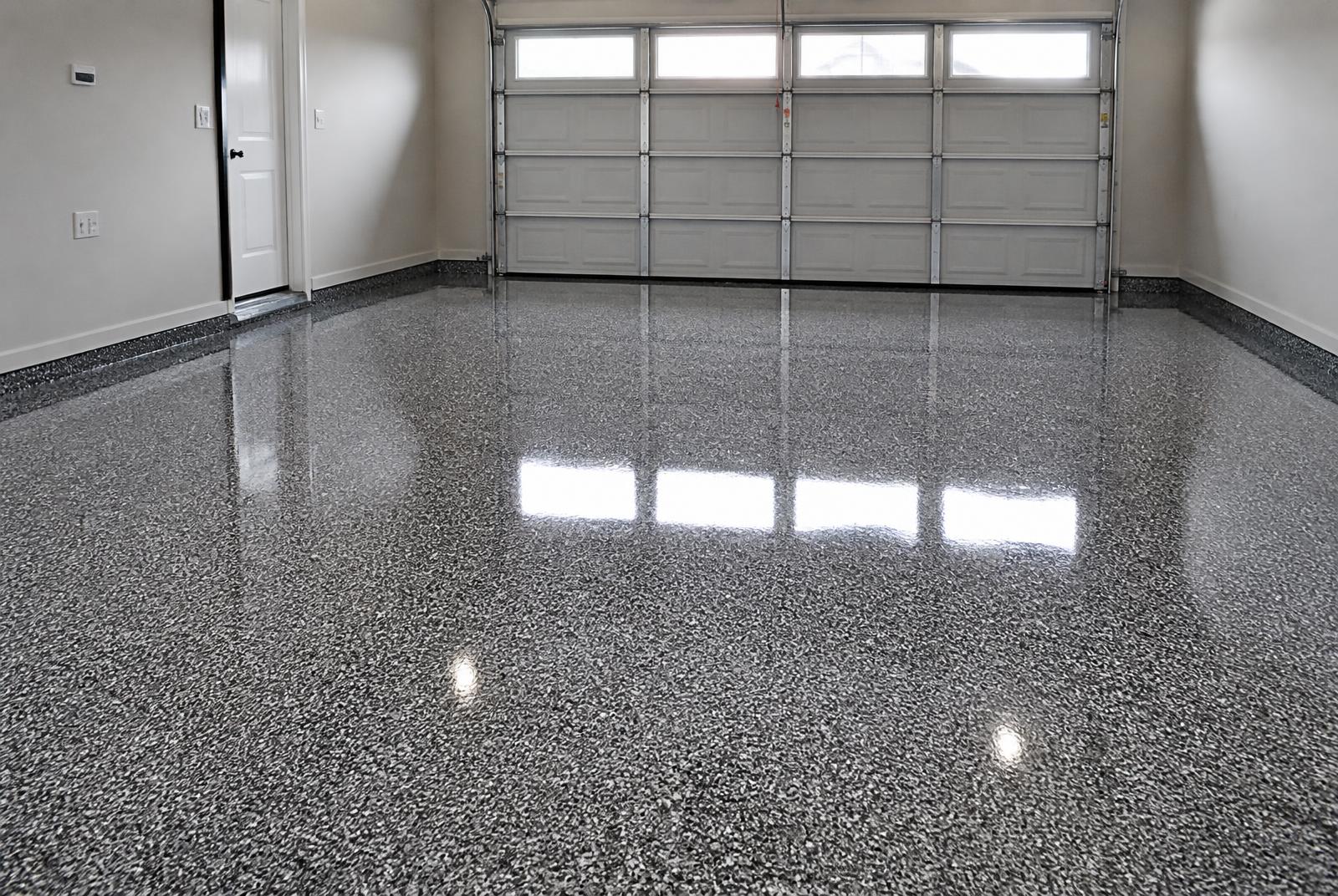
Flaked epoxy floor coating on a finished concrete floor in Thunder Bay, Ontario
Epoxy floor coatings

Epoxy Garage Floor Coatings in Thunder Bay, ON

A coating is only as good as what is under it. We grind the slab back to bare concrete and check it for moisture before anything goes down, because that is where these floors fail.

Indigenous and Italian-owned, Thunder Bay bornGround and moisture tested before we coatFree virtual estimates from your photos

Send a few photos and we will send you a price.

Photos (optional)Add up to 3 photos of the area — it helps us price faster. Totally optional.

Failed Epoxy Floors Almost Always Failed Before the Coating Went Down

01Peeling or lifting in sheets rather than chipping
02Bubbles or blisters under the surface
03Coating pulled up in the shape of a tire footprint
04Flaking concentrated where snowmelt and salt collect
05A clear topcoat that has gone yellow
06A hardware store kit that looked good for two winters
Client testimonials

Precision Results.

5-star ratings from Google

Ryan Doucette

5 reviews · 4 weeks ago

“This company is great. Hard working guys who make sure you end up with a great result. Very experienced workers who can adapt to any job you throw at them!”

Robert McCollum

1 review · 4 months ago

“Had a beautiful patio done for my parents in their backyard, stamped and sealed. Looks fantastic and very professional/efficient crew! 10/10 and would highly recommend!”

Aaron Whipple

2 reviews · 6 months ago

“They did an amazing job. Definitely recommend them if you're looking for a concrete contractor in Thunder Bay.”

Ethan Chiodo

2 reviews · 6 months ago

“Precision Concrete did an outstanding job. Professional, reliable, and top-quality work from start to finish. Tyler and Johnny were great to work with and made sure everything was done right.”

Hugo Petrone

1 review · a year ago

“Excellent work from Tyler and Johnny. I was blown away from start to finish with their attention to detail and overall craftsmanship. If you want your job done right, call precision concrete.”

Verified reviews from our Google Business Profile

Read our Google reviews
What's included

Epoxy Floor Coatings in Thunder Bay: What to Expect


An epoxy floor is four or five thin layers built up over a slab that has been mechanically opened up to receive them. Done properly it is a coating system rather than a coat of paint, and the difference in the field is roughly four to six times the film thickness plus a bond that goes into the concrete rather than sitting on it. Most of the work happens before any colour appears.

Grinding, not etching

We grind the slab with diamond tooling until it has a surface profile the coating can key into. A residential flake system wants a texture in the range of 60 to 100 grit sandpaper. Acid etching is the shortcut, and the major coating manufacturers no longer accept it as preparation for their systems, because it cannot remove curing compounds or oils and it introduces water that then has to leave again.

Moisture testing, which is the step most people skip

Before we coat, the slab gets tested. One method measures vapour coming off the surface over 60 to 72 hours; the other puts probes into holes drilled into the slab and reads relative humidity inside the concrete. The second is the better test on an older slab, because the first only reads the surface. The coating manufacturer sets the pass mark, and over the limit, the answer is a moisture mitigation primer or, sometimes, not coating that floor.

The system, temperature, and timing

Cracks and spalled areas get repaired first. Then a penetrating primer, a pigmented base coat, and while that base is still wet, vinyl flake broadcast into it. Once cured, the excess flake is scraped and vacuumed off, and a clear coat and a topcoat go over the whole thing. Coatings have real temperature limits: the slab has to be above the product's minimum and at least 3 C above the dew point, held there through the entire cure. In practice that means garage work here is a spring-to-autumn job unless the space can be heated and dehumidified.

New concrete needs a minimum of 28 days before it can even be tested, and in a cool damp autumn it may need longer. Foot traffic and driving times depend entirely on the chemistry, so we will give you real dates once we know your floor.

Why us

Why Thunder Bay Calls Us for Epoxy Floors


Indigenous and Italian-owned, from here

Precision Concrete is Indigenous and Italian-owned and both partners grew up in Thunder Bay. We work across the district, including for Indigenous communities, and you deal with an owner rather than a call centre.

We test before we coat

Moisture coming up through a slab is what lifts coatings off it. We test the slab rather than assuming, because an older garage here was likely poured with nothing underneath it.

Ground, not etched

Coating grips a profile ground into the concrete. Acid etching is the shortcut and the major manufacturers no longer accept it for their systems. Ask whoever quotes you next how they prepare the slab.

We pour floors too

We are a concrete company that also coats. If your slab is past saving we can tell you honestly, pour a new one, and coat it once it has cured properly rather than selling you a coating over a floor that needs replacing.

Straight answers about winter

Coatings have hard temperature limits. We will tell you when your garage can be done and when it cannot, and if the answer is spring, we would rather say so than take the deposit.

Process

How an Epoxy Floor Install Runs


  1. Photos, then a look at the slab

    Send pictures and dimensions for a ballpark. Before we commit to a date we need to see the floor itself, because cracks, coatings and moisture all change the job.

  2. Test, then quote

    The slab gets moisture tested and we check what is already on it. You get a written estimate naming the system, the number of coats, and the flake colour.

  3. You approve, we book a weather window

    Garage work needs the slab above the product minimum and above dew point for the whole cure, so we schedule around that rather than around the calendar.

  4. Empty, grind, repair, coat

    The garage has to be cleared out. We grind the slab, fix cracks and spalled areas, then prime, base coat, broadcast flake, scrape and vacuum, and topcoat.

  5. Cure and walkthrough

    We tell you the exact date you can walk on it and the date you can park on it, go over cleaning and salt, and close the job out with you.

Pricing

How Much Does an Epoxy Garage Floor Cost in Thunder Bay?


Epoxy is priced by the square foot and the spread between quotes is usually larger than customers expect. That spread is real and it is mostly preparation and film thickness. A single thin coat rolled over an etched slab and a multi-layer system ground into bare concrete are different products at different prices, and they photograph identically on day one.

Removing a failed previous coating is the one that surprises people most, and it is worth knowing before you compare a quote from someone who did not mention it.

Send photos and dimensions and we will give you a range, then confirm it once we have seen the slab. The estimate is free either way.
Related work

You May Also Need


Service area

We Coat Floors Across the Thunder Bay District


We install epoxy floors in Thunder Bay, Slate River Valley, Shuniah, Oliver Paipoonge, Kakabeka Falls, Neebing, Gillies, Conmee, and Dorion, and travel further into Northwestern Ontario, including Nipigon, Marathon, Kenora, Longlac, Fort Frances, Geraldton, and Sault Ste. Marie for larger projects.

Thunder BayOliver PaipoongeSlate River ValleyShuniahNeebingGilliesConmeeDorion
Questions

Epoxy Floor FAQ


In a heated garage, yes. In an unheated one, no, and nobody honest will tell you otherwise. Coatings need the slab above the product's minimum temperature and at least 3 C above the dew point for the entire cure, and if it drops below mid-cure the curing can stop and never restart. A slab also takes days to warm through, so heating the air for a morning does not do it. Basements are different: they are heated space already, which makes them a good winter job.

It is priced by the square foot, and the spread between quotes is wider than most people expect. Preparation and film thickness account for most of it. Your number moves on floor area, crack and spall repair, whether an old coating has to be removed, whether the moisture reading calls for a mitigation primer, and the system you pick. Send photos and dimensions for a range and we will confirm it after seeing the slab.

It depends entirely on the chemistry, which is why we give you dates rather than a rule. Epoxy systems generally want a week before vehicles. Polyaspartic can be ready for wheeled traffic in about a day. Cold slows both down considerably. Traffic cure and chemical cure are different: a floor can hold a car days before it will shrug off a brake fluid or de-icer spill, so keep the garage tidy that first week.

Almost always preparation or moisture. Coating grips a profile ground into the concrete, so over a smooth or sealed slab it is only sitting there. Moisture is the other one: vapour moving up through the slab builds pressure under an impermeable film and lifts it, which is what blisters are. Both are avoidable and both are invisible once the floor is coated, which is why they keep happening.

It is when the coating lifts in the shape of your tire. Tires heat up on a drive and stay hot parked, which softens a coating with low heat tolerance, and as the tread cools it contracts and grabs. Tire rubber also carries plasticizers and waxes that migrate to the surface with heat and interfere with adhesion. Thin single-coat kits are the vulnerable ones. Proper grinding, a penetrating primer, decent film thickness, and a polyaspartic or polyurea topcoat are what prevent it.

The coating handles salt far better than bare concrete does, which is a large part of why people coat a garage floor in this climate in the first place. Your car drips brine all winter and a coated floor keeps it off the concrete. Rinse the floor down in spring and it will look after itself.

Often yes. Pitting and spalling from years of salt is surface damage, and repairing it is a normal part of the prep. What cannot be coated over is a slab that has structurally failed, is actively moving, or has water coming up through it faster than a mitigation system can handle. We would rather tell you the floor needs replacing than take money for a coating that will fail on top of it.

Twenty-eight days minimum, and that is when we can start testing rather than when it is ready. Fresh concrete carries a lot of water and it has to leave before a film goes over it. In a cool damp autumn a slab can need considerably longer, and a September pour may not be coatable until the following year. We test rather than counting days on a calendar.

A DIY kit is typically a single water-based coat around 3 mils thick applied over an etched surface. A professional system is four or five layers running roughly 8 to 16 mils over a mechanically ground slab. That is four to six times the thickness and a different bond. Polyaspartic is a different chemistry: it cures much faster, tolerates colder application, and resists UV yellowing better, which is why it usually appears as the topcoat over an epoxy base.

Claim your free consultation
Free on-site consultation

Let's Get a Real Floor Under Your Vehicles

Send photos of the garage and we will tell you whether it is a candidate and what it would take.

Claim your free consultationOr call (807) 633-0653
Or call (807) 633-0653